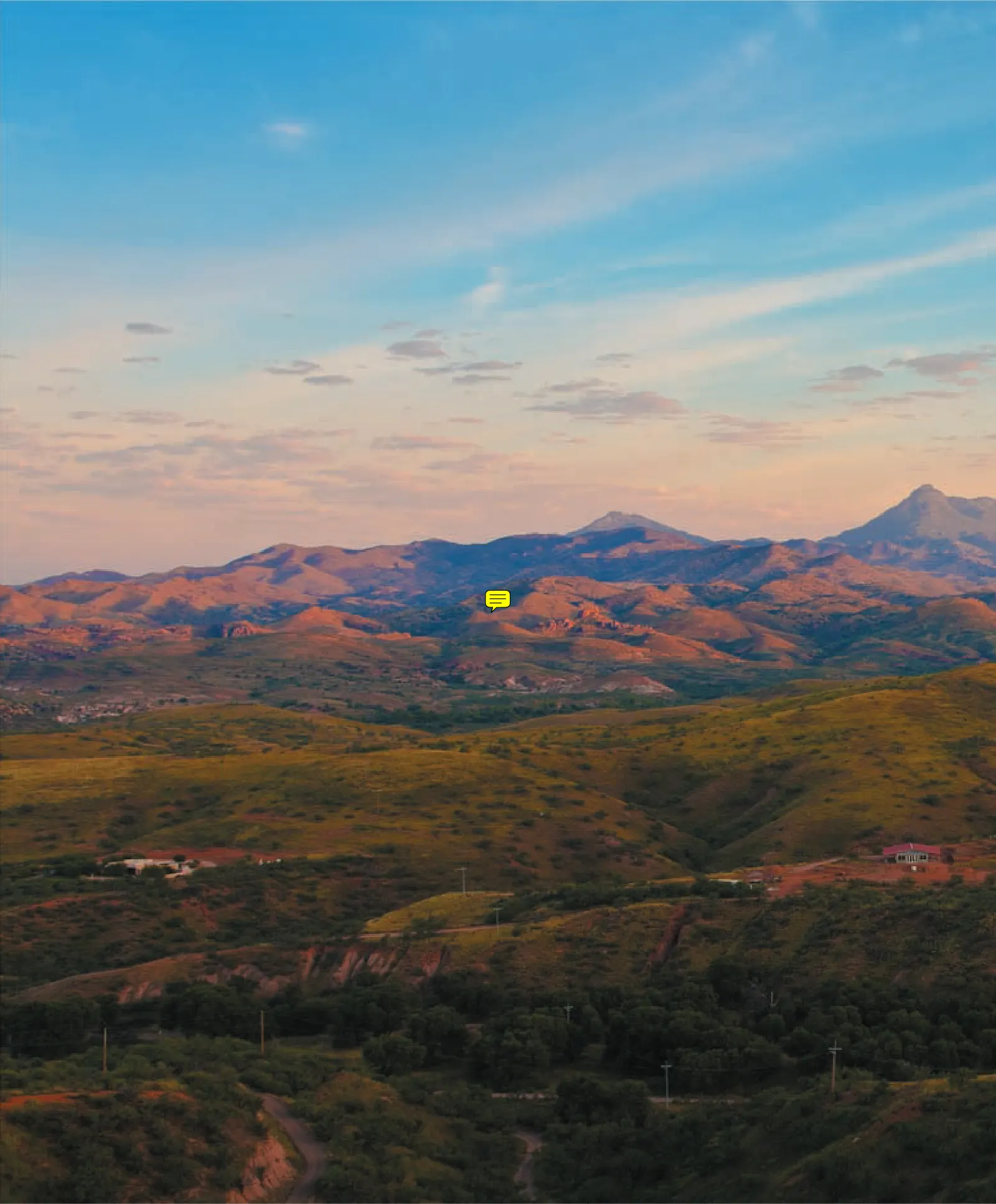
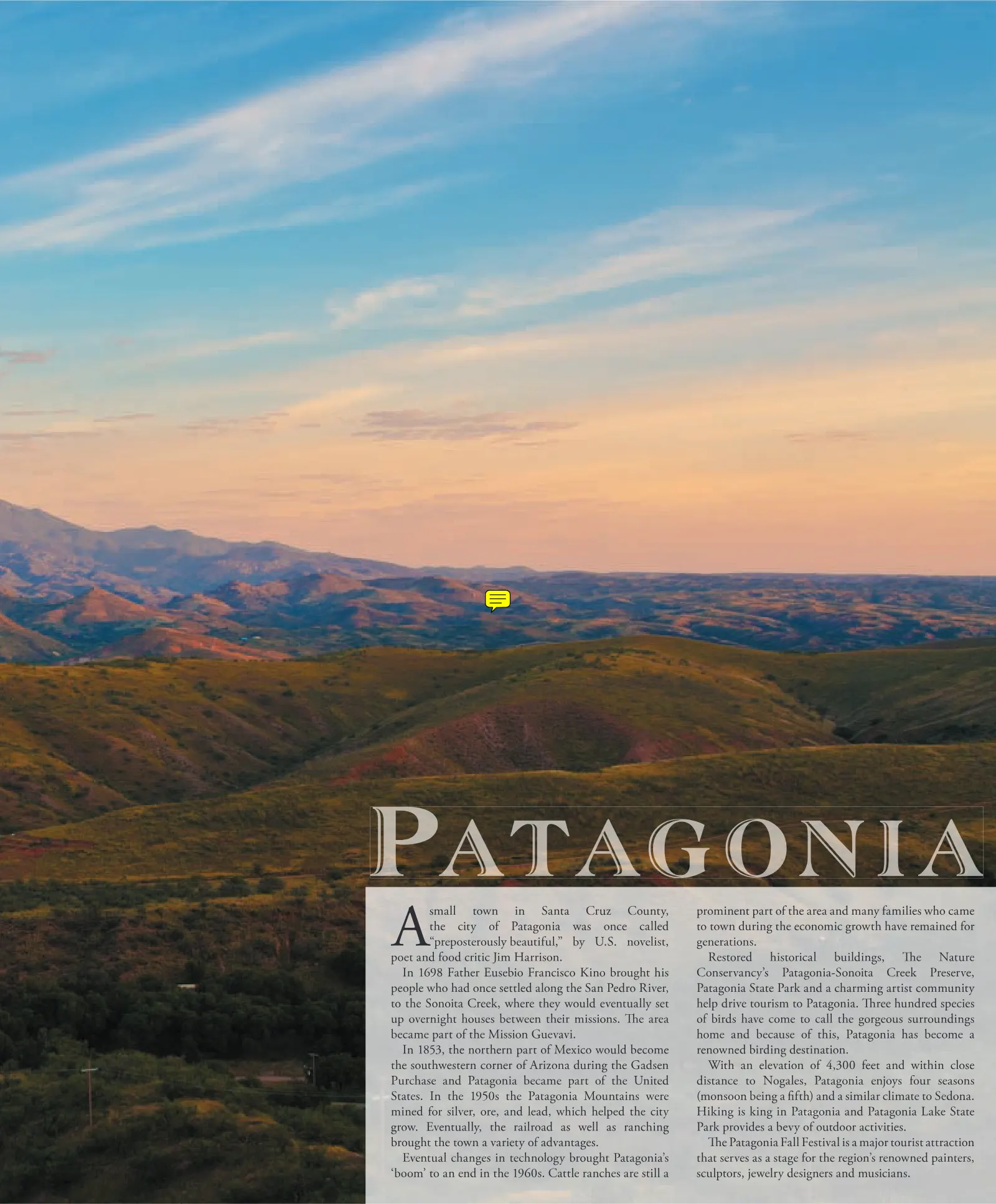
A small town in Santa Cruz County, the city of Patagonia was once called “preposterously beautiful,” by U.S. novelist, poet and food critic Jim Harrison. In 1698 Father Eusebio Francisco Kino brought his people who had once settled along the San Pedro River, to the Sonoita Creek, where they would eventually set up overnight houses between their missions. The area became part of the Mission Guevavi. In 1853, the northern part of Mexico would become the southwestern corner of Arizona during the Gadsen Purchase and Patagonia became part of the United States. In the 1950s the Patagonia Mountains were mined for silver, ore, and lead, which helped the city grow. Eventually, the railroad as well as ranching brought the town a variety of advantages. Eventual changes in technology brought Patagonia’s ‘boom’ to an end in the 1960s. Cattle ranches are still a prominent part of the area and many families who came to town during the economic growth have remained for generations. Restored historical buildings, The Nature Conservancy’s Patagonia-Sonoita Creek Preserve, Patagonia State Park and a charming artist community help drive tourism to Patagonia. Three hundred species of birds have come to call the gorgeous surroundings home and because of this, Patagonia has become a renowned birding destination. With an elevation of 4,300 feet and within close distance to Nogales, Patagonia enjoys four seasons (monsoon being a fifth) and a similar climate to Sedona. Hiking is king in Patagonia and Patagonia Lake State Park provides a bevy of outdoor activities. The Patagonia Fall Festival is a major tourist attraction that serves as a stage for the region’s renowned painters, sculptors, jewelry designers and musicians.