
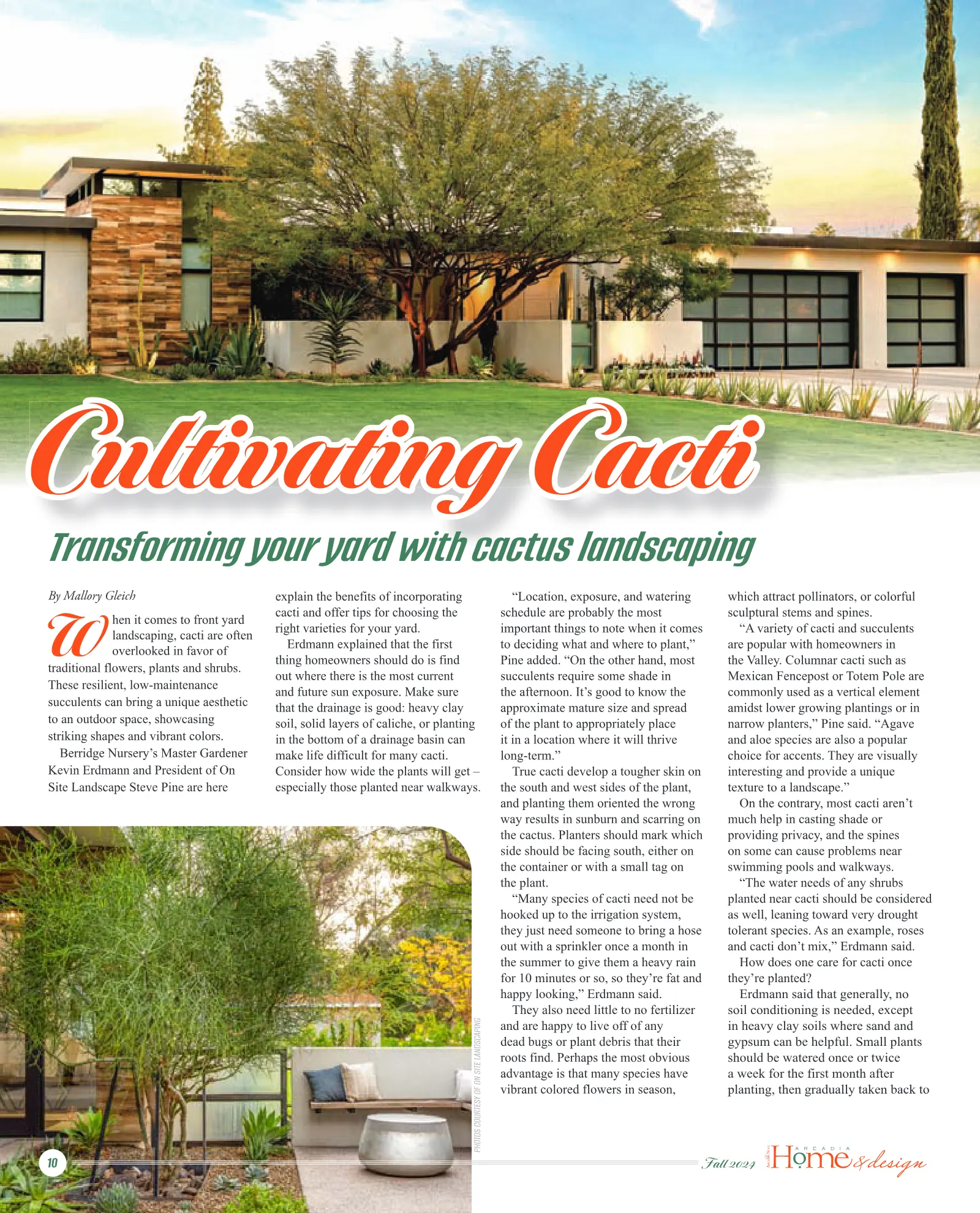
Fall 2024 10 Cultivating Cacti “Location, exposure, and watering schedule are probably the most important things to note when it comes to deciding what and where to plant,” Pine added. “On the other hand, most succulents require some shade in the afternoon. It’s good to know the approximate mature size and spread of the plant to appropriately place it in a location where it will thrive long-term.” True cacti develop a tougher skin on the south and west sides of the plant, and planting them oriented the wrong way results in sunburn and scarring on the cactus. Planters should mark which side should be facing south, either on the container or with a small tag on the plant. “Many species of cacti need not be hooked up to the irrigation system, they just need someone to bring a hose out with a sprinkler once a month in the summer to give them a heavy rain for 10 minutes or so, so they’re fat and happy looking,” Erdmann said. They also need little to no fertilizer and are happy to live off of any dead bugs or plant debris that their roots find. Perhaps the most obvious advantage is that many species have vibrant colored flowers in season, By Mallory Gleich W hen it comes to front yard landscaping, cacti are often overlooked in favor of traditional flowers, plants and shrubs. These resilient, low-maintenance succulents can bring a unique aesthetic to an outdoor space, showcasing striking shapes and vibrant colors. Berridge Nursery’s Master Gardener Kevin Erdmann and President of On Site Landscape Steve Pine are here which attract pollinators, or colorful sculptural stems and spines. “A variety of cacti and succulents are popular with homeowners in the Valley. Columnar cacti such as Mexican Fencepost or Totem Pole are commonly used as a vertical element amidst lower growing plantings or in narrow planters,” Pine said. “Agave and aloe species are also a popular choice for accents. They are visually interesting and provide a unique texture to a landscape.” On the contrary, most cacti aren’t much help in casting shade or providing privacy, and the spines on some can cause problems near swimming pools and walkways. “The water needs of any shrubs planted near cacti should be considered as well, leaning toward very drought tolerant species. As an example, roses and cacti don’t mix,” Erdmann said. How does one care for cacti once they’re planted? Erdmann said that generally, no soil conditioning is needed, except in heavy clay soils where sand and gypsum can be helpful. Small plants should be watered once or twice a week for the first month after planting, then gradually taken back to explain the benefits of incorporating cacti and offer tips for choosing the right varieties for your yard. Erdmann explained that the first thing homeowners should do is find out where there is the most current and future sun exposure. Make sure that the drainage is good: heavy clay soil, solid layers of caliche, or planting in the bottom of a drainage basin can make life difficult for many cacti. Consider how wide the plants will get – especially those planted near walkways. Transforming your yard with cactus landscaping PHOTOS COURTESY OF ON SITE LANDSCAPING
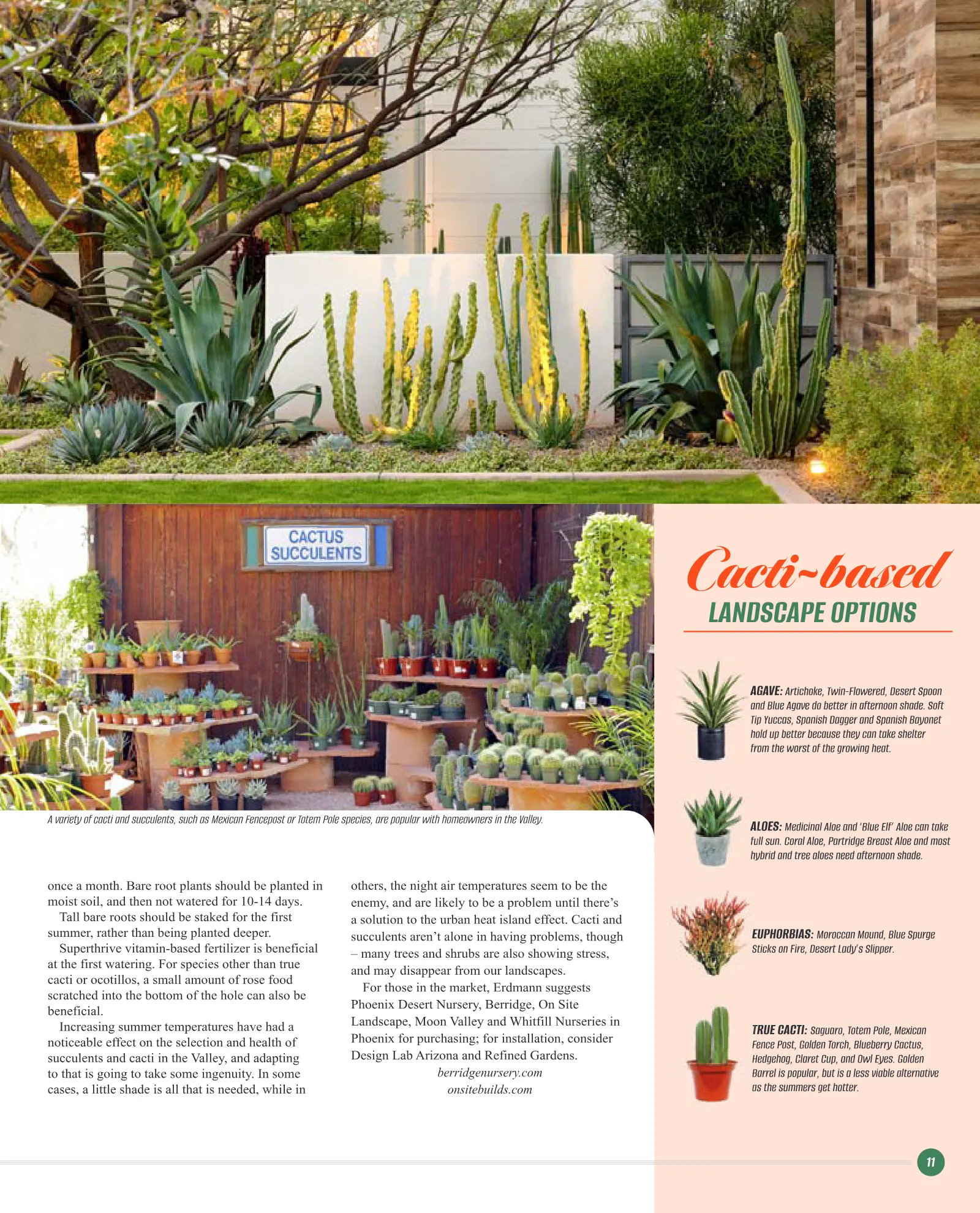
11 A variety of cacti and succulents, such as Mexican Fencepost or Totem Pole species, are popular with homeowners in the Valley. once a month. Bare root plants should be planted in moist soil, and then not watered for 10-14 days. Tall bare roots should be staked for the first summer, rather than being planted deeper. Superthrive vitamin-based fertilizer is beneficial at the first watering. For species other than true cacti or ocotillos, a small amount of rose food scratched into the bottom of the hole can also be beneficial. Increasing summer temperatures have had a noticeable effect on the selection and health of succulents and cacti in the Valley, and adapting to that is going to take some ingenuity. In some cases, a little shade is all that is needed, while in others, the night air temperatures seem to be the enemy, and are likely to be a problem until there’s a solution to the urban heat island effect. Cacti and succulents aren’t alone in having problems, though – many trees and shrubs are also showing stress, and may disappear from our landscapes. For those in the market, Erdmann suggests Phoenix Desert Nursery, Berridge, On Site Landscape, Moon Valley and Whitfill Nurseries in Phoenix for purchasing; for installation, consider Design Lab Arizona and Refined Gardens. berridgenursery.com onsitebuilds.com Cacti-based LANDSCAPE OPTIONS TRUE CACTI: Saguaro, Totem Pole, Mexican Fence Post, Golden Torch, Blueberry Cactus, Hedgehog, Claret Cup, and Owl Eyes. Golden Barrel is popular, but is a less viable alternative as the summers get hotter. EUPHORBIAS: Moroccan Mound, Blue Spurge Sticks on Fire, Desert Lady’s Slipper. TRUE CACTI: Fence Post, Golden Torch, Blueberry Cactus, Hedgehog, Claret Cup, and Owl Eyes. Golden Barrel is popular, but is a less viable alternative as the summers get hotter. EUPHORBIAS: Sticks on Fire, Desert Lady’s Slipper. AGAVE: Artichoke, Twin-Flowered, Desert Spoon and Blue Agave do better in afternoon shade. Soft Tip Yuccas, Spanish Dagger and Spanish Bayonet hold up better because they can take shelter from the worst of the growing heat. ALOES: Medicinal Aloe and ‘Blue Elf’ Aloe can take full sun. Coral Aloe, Partridge Breast Aloe and most hybrid and tree aloes need afternoon shade. AGAVE: and Blue Agave do better in afternoon shade. Soft Tip Yuccas, Spanish Dagger and Spanish Bayonet hold up better because they can take shelter from the worst of the growing heat. ALOES: full sun. Coral Aloe, Partridge Breast Aloe and most hybrid and tree aloes need afternoon shade.